
Many adults over 50 assume stiffness and discomfort are simply part of aging — but small daily habits may play a bigger role than most realize.
1. The Morning Ritual She Started to Dread
It happened quietly, almost without her noticing.
For a long time, mornings were her favorite part of the day. She loved the quiet of the house, the smell of the first cup of coffee brewing in the kitchen, and the soft light filtering through the living room windows.
But over the past few years, that peaceful morning routine had slowly been replaced by a quiet, private negotiation with her own body.
The Stairs Became a Daily Reminder
It usually started the moment she swung her legs over the edge of the bed. Her knees felt stiff, almost as if they had locked up overnight. Her lower back carried a dull, heavy ache that made standing up straight feel like a chore.
Then came the stairs.
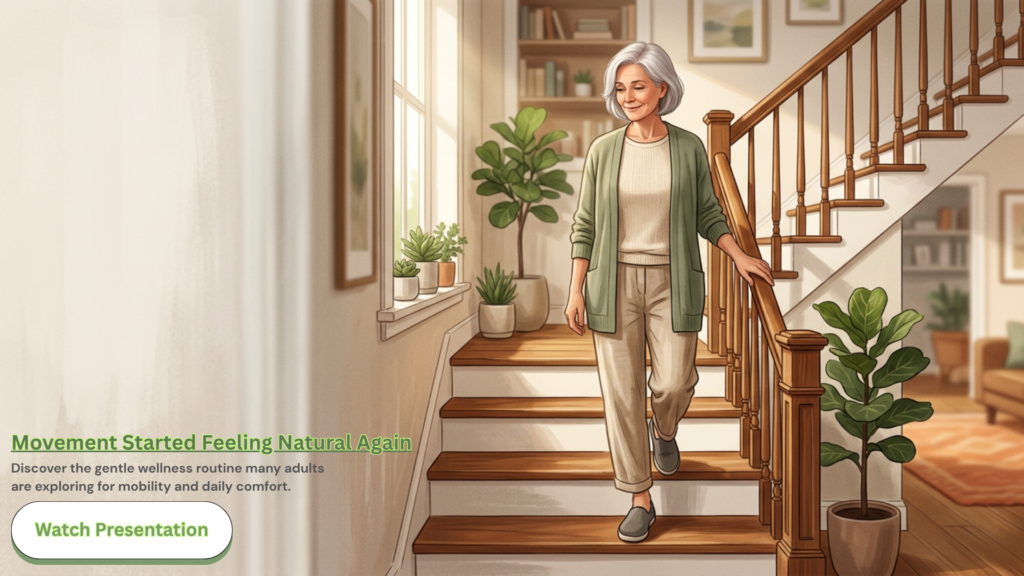
Standing at the top of the staircase, she found herself gripping the wooden railing just a little tighter than she used to. She would take a deep breath, carefully placing one foot on the first step, testing the waters before committing her full weight. Going down was always worse than going up. Each step sent a tiny shockwave of discomfort through her joints, forcing her to take it slow, sideways, and cautious.
She never mentioned it to her husband. She didn’t want to worry her adult children when they came to visit. Instead, she just adapted.
She stopped taking the dog for his longer evening walks, opting just to let him out in the backyard. She started declining invitations to go browsing at the outdoor weekend markets with her friends. When her grandchildren ran around the living room, she stayed firmly planted on the sofa, smiling and clapping, but secretly wishing she could get down on the rug with them.
She realized it wasn’t just about discomfort anymore. It was about whether her world would continue getting smaller year after year.
“She didn’t want to feel young again. She just wanted to stop planning her life around stiffness.”
At first, she blamed age. She thought, This is just what happens when you cross a certain milestone. But as she watched her daily radius shrink, she started wondering if something deeper was affecting how her body felt each morning.
2. The “Normal Aging” Trap
We are conditioned to believe that growing older simply means hurting more.
It’s a narrative passed down through generations, reinforced by casual conversations at family gatherings and jokes about “creaky knees.” Society tells us that once we reach a certain age, our bodies are supposed to slow down and protest sudden movements.
Because of this, millions of adults normalize their daily discomfort.
Small Signs Many Adults Quietly Notice
- Taking the stairs more slowly and deliberately
- Standing up carefully after sitting for a movie or a meal
- Avoiding longer walks on hard pavement
- Feeling notably stiff for the first hour after waking up
- Needing significantly more recovery time after simple activities
Why Less Movement Often Makes Things Worse
Assuming that stiffness is purely a side effect of the calendar year traps us in a frustrating cycle. When our joints feel stiff, our natural instinct is to move less. We sit a little longer. We take the elevator. We skip the evening stroll.
Unfortunately, the body is designed for motion. When we reduce our movement to avoid discomfort, we inadvertently slow down our circulation. The muscles supporting our joints begin to weaken from underuse.
This creates a self-fulfilling prophecy: we move less because we feel stiff, and we feel stiffer because we are moving less. Everyday, low-grade inflammation can slowly build up, exacerbated by modern diets, stress, and a lack of gentle movement.
But does it have to be this way?
If we look across the globe, we see that aging doesn’t look the same everywhere. Some older adults in Japan approach movement, recovery, and daily activity very differently as they age. In these active cultures, daily movement isn’t a chore; it’s seamlessly woven into the fabric of everyday life, keeping the body supple and the mind engaged.
This realization meant that perhaps she wasn’t entirely at the mercy of time.
3. A Quiet Turning Point
The shift didn’t happen because of a dramatic doctor’s visit. It happened on a random Tuesday afternoon over a cup of tea with a friend she hadn’t seen in nearly a year.
Her friend, who was actually three years older, practically bounced up from the café table to go grab a napkin. There was no hesitation, no gripping the table for support, no wincing.
The Tiny Habit She Almost Ignored
When she finally asked her friend how she was moving so effortlessly, the answer was surprisingly boring.
There was no exhaustive workout boot camp and no magic pill. Instead, her friend talked about small, nearly invisible daily habits. Staying consistently hydrated. Adding a short, five-minute stretching routine while watching the evening news. And most importantly, she mentioned a gentle daily mobility routine supported by natural ingredients designed to soothe the body from the inside out.
It sounded almost too simple to make a real difference. But standing at the top of her staircase that evening, dreading the descent, she realized she had nothing to lose by trying.
She decided to start incredibly small.
She began taking a simple, ten-minute walk after dinner. She started drinking a large glass of water first thing in the morning. She incorporated a few gentle stretches before bed. And she began exploring natural, daily joint support to help give her body the raw materials it needed to recover from daily movement.
Why This Matters More After 50
When we are in our 20s and 30s, our bodies bounce back from inactivity quickly. But after 50, the compound effect of gravity, diet, and minor wear-and-tear requires us to be more proactive. We can no longer afford to let our joints “dry out” from prolonged sitting. Supporting our body’s natural recovery processes becomes essential, not optional, if we want to retain our independence.
4. The Science of Moving Well (Without Overcomplicating It)
To understand why these small habits make such a difference, it helps to look at what is actually happening inside the body.
What Morning Stiffness May Really Mean
Think of your joints like the gears of a well-crafted clock. For these gears to turn smoothly, they need constant lubrication (synovial fluid). When we move, this fluid washes over the joint tissue, delivering vital nutrients.
When we sleep, or sit for long periods, we are naturally inactive. The fluid settles. The “gears” dry out slightly. This is why the first few steps out of bed often feel the most restrictive.
When you commit to a daily, low-impact evening walk, you are physically pumping circulation through your legs, hips, and back. You are telling your body to distribute nutrients and flush out the stiffness before you lie down for the night.
This is also why many people have begun turning toward targeted natural support. Certain natural botanicals and extracts have been used for centuries to support a healthy inflammatory response. Rather than forcing the body to ignore discomfort, these gentle ingredients aim to support the body’s natural ability to maintain healthy, supple joints.
It’s about giving your body the tools it needs to recover gracefully.
Why Small Daily Habits Matter More Than Most People Realize.
Gentle daily routines may help support circulation, flexibility, recovery, and overall mobility as we age.
Habits
Gentle walking
Stretching
Hydration
Better sleep
Why It Helps
Supports circulation
Encourages flexibility
Helps tissue function
Supports overnight recovery
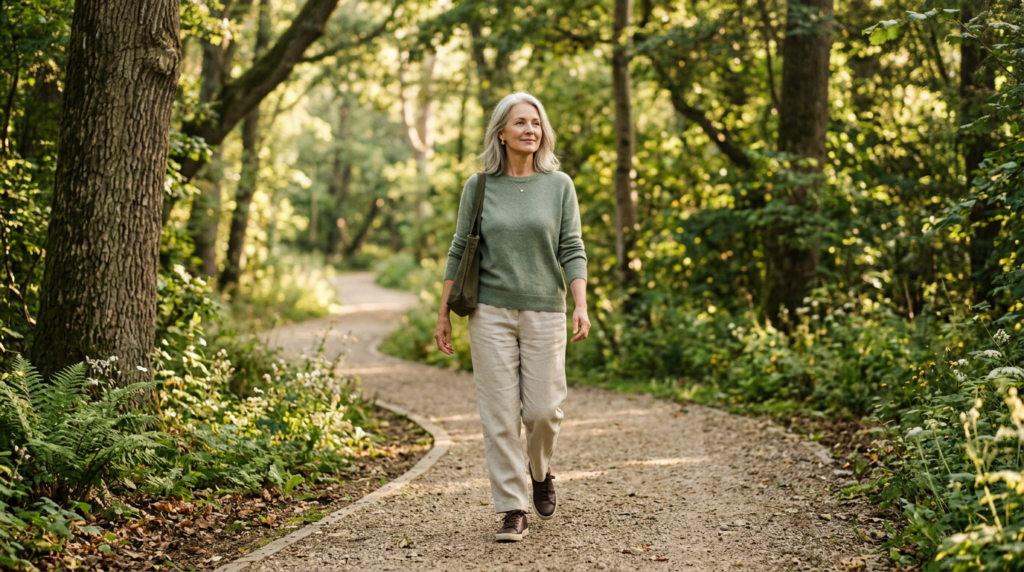
See Why So Many Adults Are Exploring This Gentle Daily Wellness Routine
Small daily habits — combined with gentle nutritional support — may help support mobility, flexibility, and everyday comfort as we age.
Many readers have been exploring a simple wellness approach designed to complement walking, stretching, and healthy recovery routines.
5. Getting the Years Back
Months later, the house feels different.
The biggest realization didn’t hit her all at once. It happened on a random Thursday morning. She woke up, walked out of her bedroom, and went down the stairs to the kitchen to make coffee. It wasn’t until the coffee was brewing that she froze, realizing what she had just done.
She had walked down the entire flight of stairs without turning sideways. She hadn’t gripped the railing with white knuckles. Her body had simply… moved.
When Her Confidence Slowly Returned
She no longer views her daily walks as a chore to endure, but as a non-negotiable part of her day that brings her joy. She has even started leaving the flat pavement of her neighborhood to explore the uneven, winding trails of the local nature reserve.
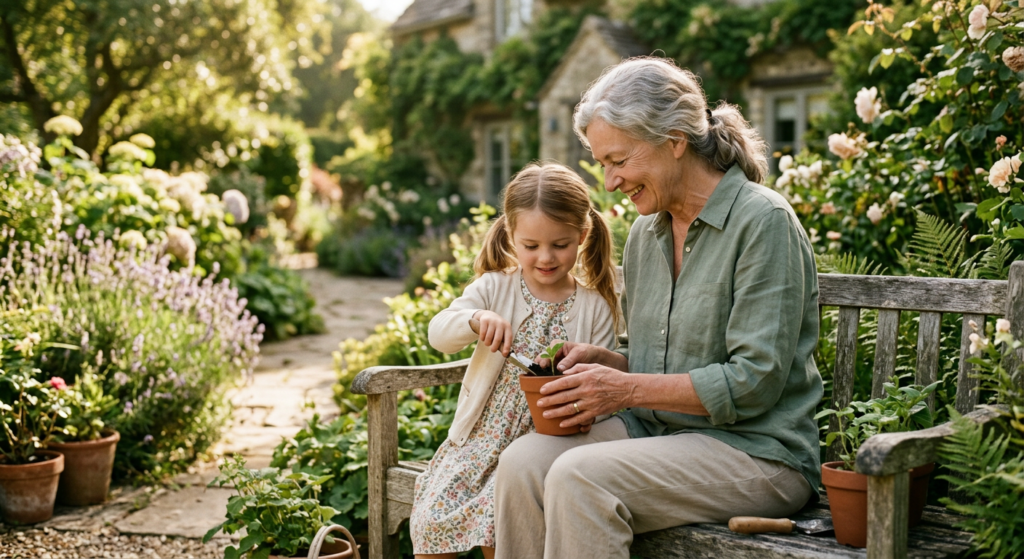
Her garden, which had become slightly overgrown because kneeling in the dirt had become too uncomfortable, is finally thriving again. She can comfortably get down in the soil to prune her tomatoes, amazed at how much easier the transition from kneeling to standing has become.
It isn’t that her body is completely impervious to fatigue. If she does heavy yard work, she still feels tired. But it’s the satisfying fatigue of a body that has been used well, rather than the sharp, restrictive discomfort of a body breaking down.
She realized that some evening routines may influence how the body feels the next morning. By sticking to her gentle stretches, her hydration, and her natural daily support, she was actively investing in tomorrow’s comfort.
She had broken the cycle.
A Closer Look at the Daily Wellness Approach Many Adults Are Talking About
Many adults are becoming more proactive about supporting mobility, flexibility, and everyday comfort before stiffness begins affecting daily life more seriously.
Some have been exploring gentle wellness routines designed to complement movement, recovery, and long-term joint support.
6. A World Opening Up Again
Aging is a privilege. It brings wisdom, deeper relationships, and a profound understanding of what truly matters in life. But enjoying those years requires a body that feels capable of participating in them.
We shouldn’t have to spend our golden years negotiating with our own knees before we stand up. We shouldn’t have to watch from the sidelines while our families make memories outdoors.
By making small, deliberate choices—choosing to take that ten-minute evening walk, choosing to stretch, choosing to nourish our bodies with natural, supportive ingredients—we can change the trajectory of how we feel on a daily basis.
It is entirely possible to wake up feeling capable. It is possible to look forward to long walks and spontaneous weekend trips without the looming anxiety of how your body will react.
If you’ve been feeling the heavy weight of everyday stiffness, know that your world does not have to keep getting smaller.
And one morning, almost without realizing it, the stairs stopped feeling like an obstacle… and started feeling like stairs again.
Some readers looking to support their daily mobility and joint health have been exploring this wellness approach here.
Explore more wellness and mobility articles on our homepage.