
In remote Japanese mountain villages, researchers noticed something unusual: older adults weren’t quietly giving up movement the way so many people do elsewhere.
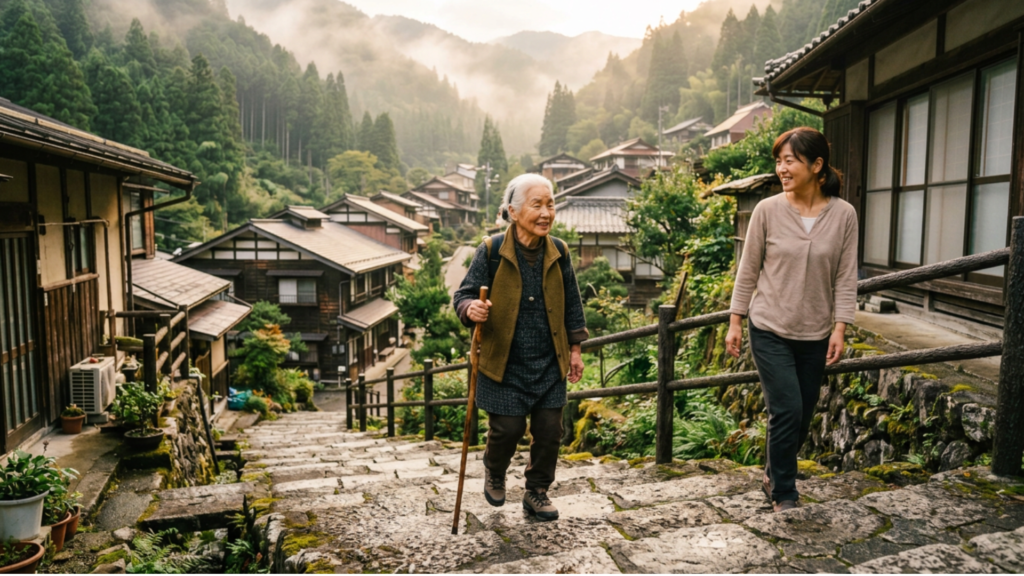
First You Give Up Running…
It doesn’t happen all at once. First, you skip the walk. Then you avoid the stairs. Then one day, you realize your world has quietly become smaller — and you’ve been calling it “just getting older.”
First, you give up running. It’s a conscious decision, a “sensible” one, you tell yourself. You trade the pavement for a brisk walk. But then, the long weekend strolls through the park start to feel more like a chore than a hobby. The local hiking trail you used to love? It starts to look a lot steeper than it did five years ago.
Soon, you’re looking at a simple flight of stairs not as a path to the next floor, but as a strategic challenge. You find yourself scanning for the railing before you even reach the first step, navigating the climb with a firm, white-knuckled grip.
Slowly, your world begins to shrink. You start saying “no” to invitations—the local street fair involves too much standing on hot asphalt; the downtown museum has too many unforgiving marble floors; and your grandchildren’s soccer game is just a bit too far of a walk from the gravel parking lot.
There is a specific kind of emotional weight that comes with this shrinking lifestyle. It’s the quiet frustration of waking up and feeling like your body is a rusted iron gate that needs half a morning just to swing open. You aren’t just losing movement; you’re losing the spontaneity that makes life feel like your life. When you stop moving freely, you stop participating in the world, and that is where the real aging begins.
Why These Japanese Mobility Habits Caught Researchers Off Guard
What they noticed challenged the way many people think about aging, movement, and independence.
The Silent Crisis of the American Living Room
And this is where the contrast becomes uncomfortable. In many American homes, movement doesn’t disappear because of one dramatic injury. It disappears slowly — chair by chair, shortcut by shortcut, avoided staircase by avoided staircase.
In the United States, we have been conditioned to accept physical stiffness as an inevitable “tax” on our birthdays. We’ve normalized the “morning groan”—that involuntary symphony of clicks, pops, and sighs that accompanies us as we roll out of bed.
We live in a culture of “sitting-to-sitting.” We sit in our cars to commute, we sit at our desks to work, and we sit on our plush couches to recover from the day. This modern lifestyle has created a quiet crisis of dependence. We become dependent on elevators to avoid the stairs, dependent on the proximity of chairs to catch our breath, and eventually, dependent on others to help us with the simple tasks of daily living—like carrying the groceries or reaching the top shelf.
Most people don’t notice mobility disappearing all at once.
First, certain movements become uncomfortable. Then long walks feel exhausting.
Then the stairs become something to avoid.
Eventually, many people quietly begin organizing daily life around avoiding discomfort. altogether.
And that’s often when independence slowly begins shrinking.
But is this decline truly “natural”? Or have we simply forgotten what the human body is capable of when it’s fueled and moved with intention? We see 70-year-olds who move like they are 90, and we tell ourselves it’s just “bad luck” or “genetics.” But across the Pacific, a different reality exists—one that challenges everything we think we know about the limits of the human frame.
Modern Aging vs. Active Aging
The difference wasn’t just age — it was daily movement.
Typical Modern Routine
- Long hours sitting in cars, chairs, and couches
- Elevators, escalators, and avoiding stairs
- Processed convenience foods
- Avoiding movement whenever possible
- Comfort-first routines
Remote Japanese Lifestyle
- Natural movement built into daily life
- Hills, steps, gardens, and floor-sitting
- Traditional nutrient-rich meals and broths
- Movement stays part of normal living
- Independence-focused aging
The Village Where Older Adults Moved Differently
High in the mist-covered mountain regions of Japan, researchers noticed something unusual.
In these remote villages, many older adults weren’t spending their days sitting indoors waiting for life to slow down. They were climbing steep stone paths, tending gardens, and walking long distances through the hills with heavy baskets.
Most notably, many spent significant portions of their day sitting on the floor and standing back up repeatedly — a level of functional mobility that would leave many modern adults breathless.
The researchers weren’t searching for a miracle cure. They were looking for patterns.
What they found was a lifestyle where movement wasn’t treated like exercise — it was simply part of daily living.
These seniors weren’t just adding years to their lives.
They seemed to be keeping movement inside those years.
But one detail kept appearing over and over again in the researchers’ notes…
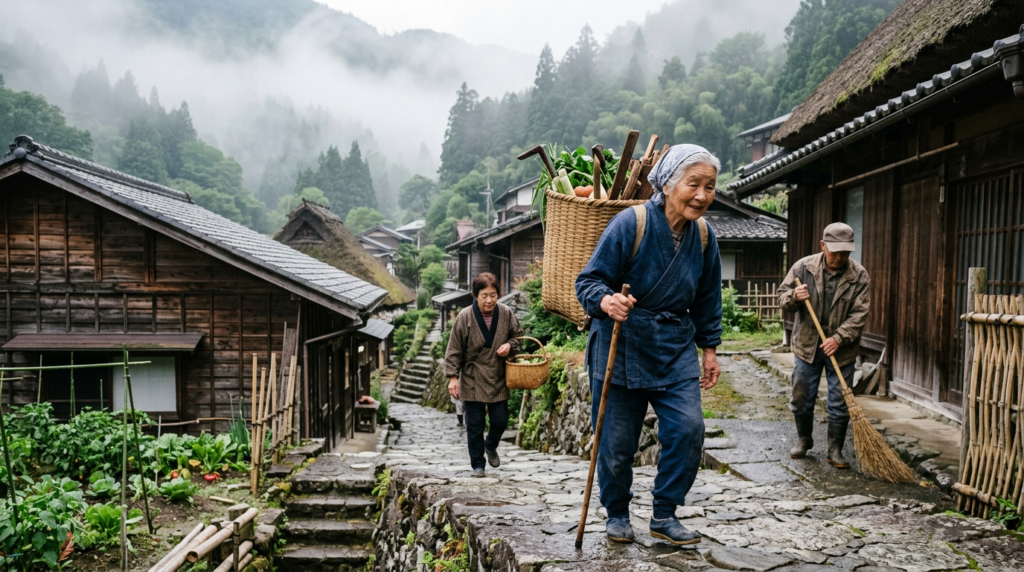
While these villagers weren’t immune to aging, their “active aging” patterns suggested something deeper than physical labor alone.
There was a visible resilience in their movement — a fluidity in their joints and posture that seemed unusual for their age.
It raised a deeper question:
Was it simply the environment… or was there something in their daily routines and traditional habits supporting this mobility?
But researchers eventually realized movement wasn’t the only unusual pattern repeatedly appearing among these older villagers…
That’s why this short presentation matters. It explores the unusual daily patterns researchers kept noticing — and why those patterns may help explain how some older adults stayed active while others slowly stopped moving.
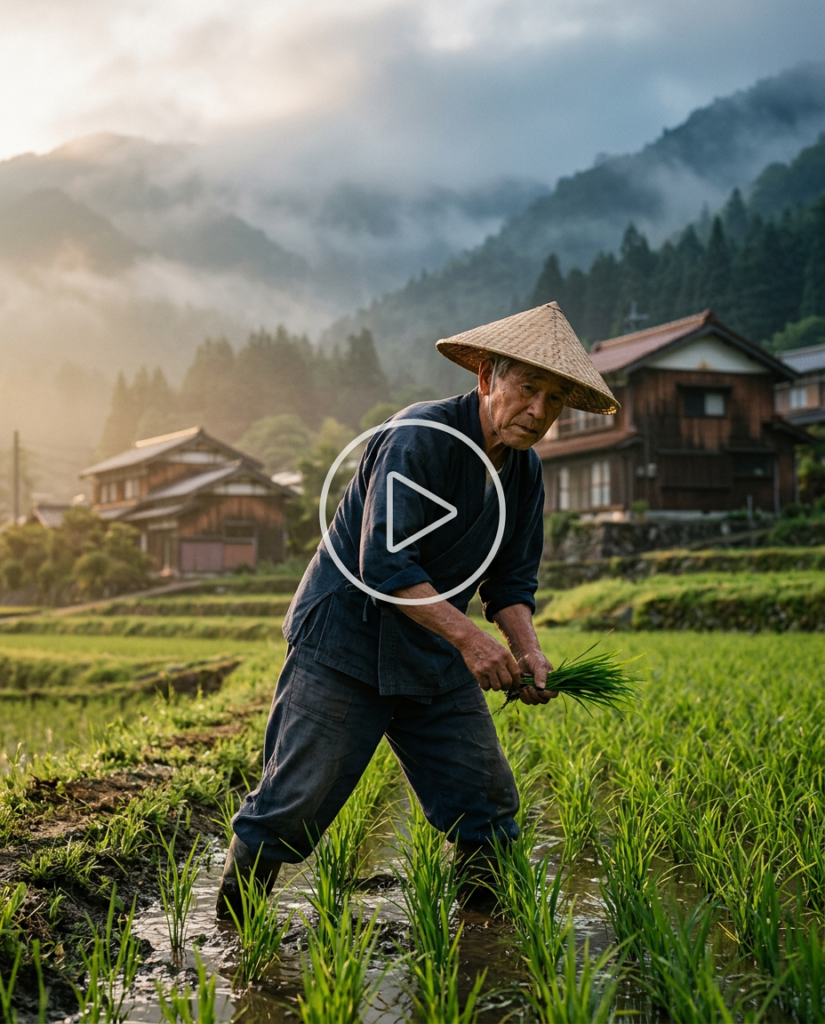
The Daily Pattern Researchers Didn’t Expect To Find
The deeper researchers looked into these mountain communities, the more one unusual daily pattern kept appearing again and again.
As researchers spent more time observing these mountain villages, their attention slowly shifted beyond movement alone.
They began noticing unusual food traditions and daily habits repeatedly appearing among many of the region’s most active older adults.
What stood out wasn’t a single “superfood.”
It was a consistent pattern of traditional ingredients and routines rarely found in modern Western lifestyles.
Researchers expected to find one famous “superfood” or exotic ingredient responsible for their mobility. Instead, they discovered something far more interesting:
a recurring presence of unusual compounds and nutrient-rich traditional foods appearing repeatedly throughout the daily routines of the region’s most active elders.
The Compounds That Kept Appearing
The interest grew as researchers realized…
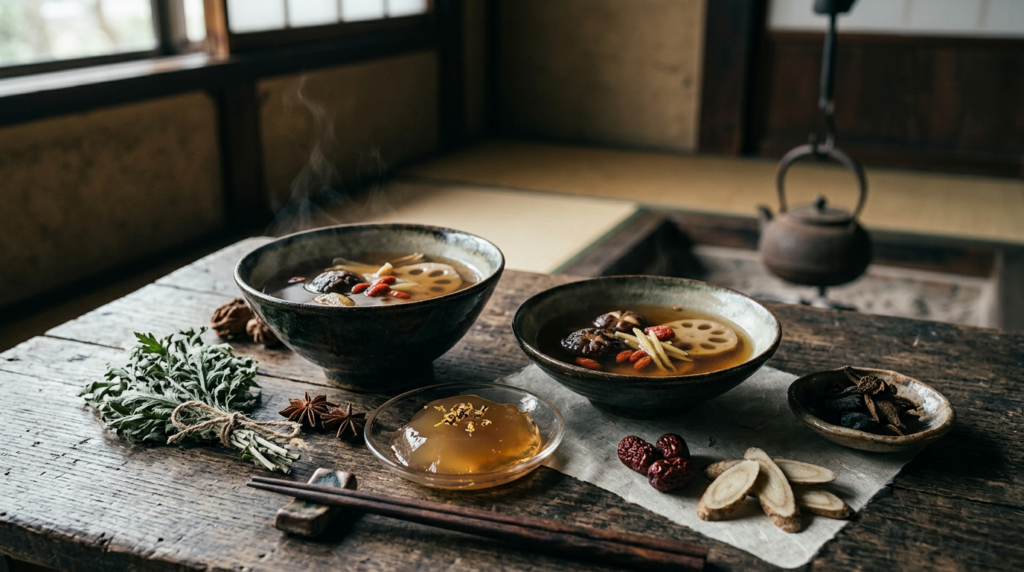
As investigators leaned deeper into the lifestyle of these mountain regions, the focus shifted from how they moved to what they were refueling with. They discovered that the secret wasn’t a single “superfood” or a rare berry, but rather a recurring presence of specific, unusual compounds in their daily traditional diet.
Wellness researchers became particularly fascinated by a group of “jelly-like” nutrients and rare botanical extracts that appeared consistently in everything from their morning broths to their ritualized afternoon teas. These weren’t the standard, processed ingredients you’d find in a typical Western grocery store.
These were:
- Traditional broths and mineral-rich meals consumed regularly
- Long-standing food traditions centered around movement and mobility
- Daily nutritional habits focused on strength, flexibility, and independence
Researchers began wondering whether these long-standing nutritional traditions were quietly supporting mobility in ways modern lifestyles no longer do.
Modern wellness science has finally caught up with these remote villages. By identifying these specific nutrients, researchers have been able to create concentrated blends that mirror the traditional wisdom of the Japanese highlands. It’s a transition from ancient tradition to modern, evidence-based support—offering a way for those of us living in the “sitting-to-sitting” world to reclaim a bit of that mountain-village vitality.
For many people living in today’s “sitting-to-sitting” world, these discoveries offered something deeply hopeful:
the possibility that mobility may not disappear as quickly as we’ve been taught to expect.
Why This Remote Village Discovery Is Getting Attention
See the short presentation exploring the unusual movement-support discovery researchers became interested in.
What Staying Mobile Can Give Back
What If Aging Didn’t Have To Feel So Limiting?
Imagine a morning where the first step out of bed doesn’t require a mental pep talk. Imagine walking down the stairs with your weight centered, confident in every step, rather than fearing a sudden twinge.
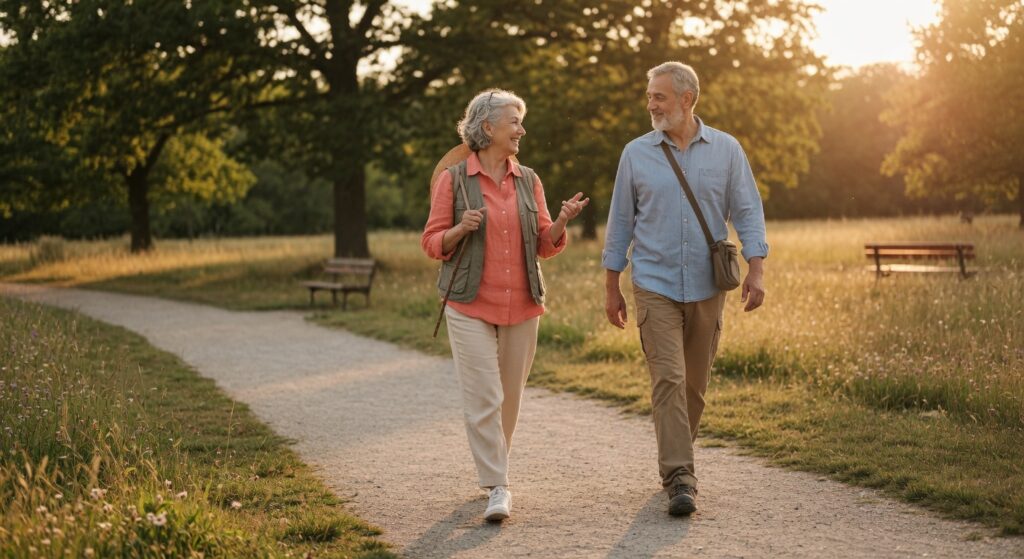
This isn’t about running marathons or trying to reverse the clock to twenty-one. It’s about the freedom of the “small things.” It’s about being the person who can get down on the floor to play with the grandkids—and, more importantly, being the person who can get back up without needing to grab the furniture for help. It’s about the confidence to book a trip to a city with cobblestone streets or to finally start that backyard garden you’ve been putting off.
The freedom to move through your own life without constantly thinking about every step, every staircase, or every outing in advance.
Researchers studying active aging and long-term movement and mobility patterns have increasingly focused on how small daily habits may shape independence later in life.
The Japanese elders in those remote mountains aren’t “lucky.” They are supported by a lifestyle and a nutritional profile that prioritizes movement. By incorporating these “hidden” discoveries into our own lives, we aren’t just supporting our joints—we are protecting our independence.
The world doesn’t have to shrink as you get older. In fact, with the right support, it might just start getting a little bigger again.
See Why This Discovery Is Getting So Much Attention
Learn why so many adults are becoming interested in this unusual mobility-support blend inspired by traditional Japanese wellness practices.