
What their daily habits may quietly teach us about healthy aging, mobility, and staying active as we grow older.
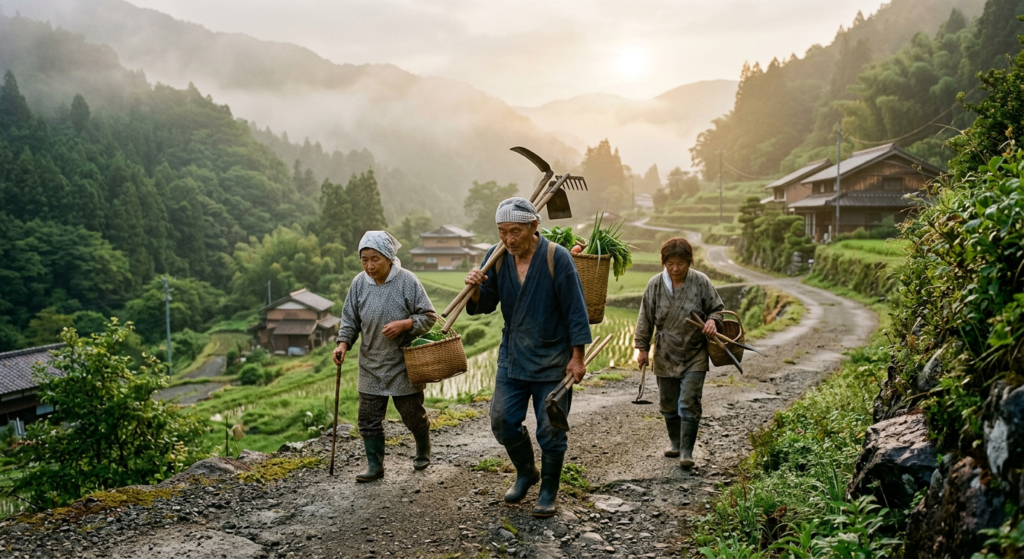
Before sunrise, the mountain roads begin to fill with movement.
Not with traffic. With people.
Older villagers in rubber boots and faded work jackets slowly make their way through the cool morning air, carrying baskets of vegetables, gardening tools, or small bags of groceries. Mist hangs gently between the hills while narrow roads wind past wooden homes, tiny shrines, and fields still wet from the night before.
Some of the villagers appear to be in their seventies or eighties. A few look even older.
And yet many continue walking those steep roads every morning as if movement were simply part of life itself.
No one seems rushed. No one appears obsessed with “fitness.”
There are no smartwatches tracking calories. No expensive gym equipment. No complicated routines.
Just movement. Steady, quiet, natural movement.
Years ago, while reading about longevity-focused communities in Japan, I noticed something that kept appearing again and again:
Many older adults in these remote regions seemed remarkably active well into later life.
Not necessarily because they were trying to “stay young,” but because they never completely disconnected from daily movement in the first place.
That idea stayed with me for a long time.
Because in much of modern life, physical discomfort, stiffness, and reduced mobility are often treated as unavoidable signs that the body is simply “wearing out.”
Slowly, many people begin adjusting their lives around discomfort. They stop taking walks, avoid stairs, and spend more time sitting than moving.
Over time, that reduced movement starts feeling normal.
But watching how these Japanese mountain communities approached daily life made me wonder something different:
What if part of modern discomfort isn’t just aging itself, but the way modern life slowly removes natural movement from our lives?
The Myth of the “Fitness Hour”
One thing that fascinated me most about these villages was how movement didn’t appear separate from life. It was life.
People walked because they needed to. They gardened daily, sat on floor mats, climbed hills carrying groceries, and crouched while tending vegetables.
Movement wasn’t something squeezed into a one-hour gym session after sitting all day. It was woven naturally into ordinary routines.
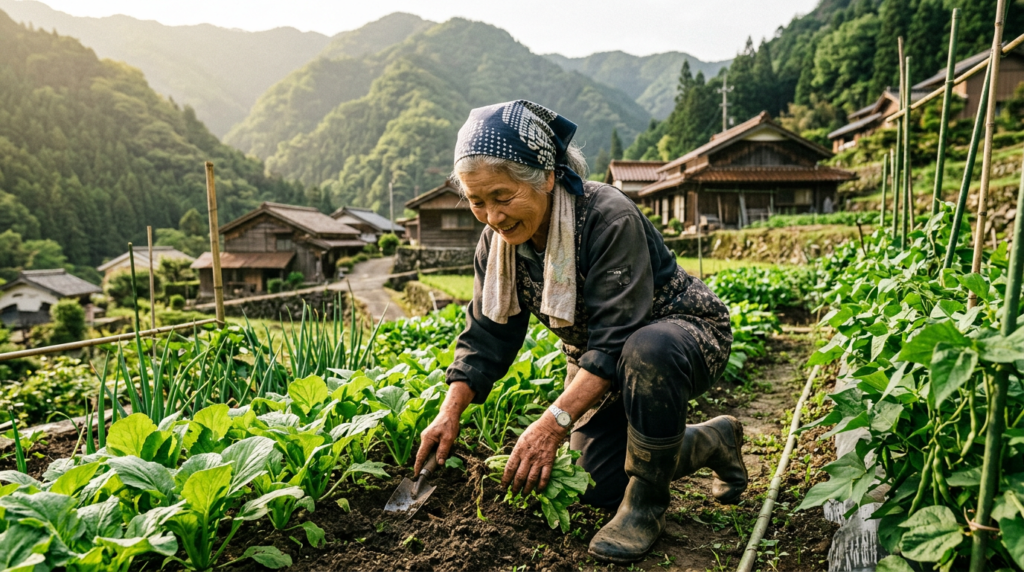
In many traditional communities, movement remains naturally built into daily routines.
And honestly, that’s very different from how many of us live today.
Modern life has turned movement into a scheduled activity. We sit in cars, sit at desks, sit on couches, and then try to “fix” eight or ten hours of stillness with a quick workout before returning to another chair.
No wonder so many people describe feeling stiff, heavy, or disconnected from their bodies.
Our bodies were designed for regular movement—not occasional bursts of compensation.
The body was designed for regular movement.
In many of these Japanese communities, older adults never fully stopped using their bodies in natural ways. And perhaps that consistency matters more than we realize.
When the Body Starts Feeling “Heavy”
Have you ever woken up feeling older than you expected to feel?
Not necessarily in pain. Just… heavy.
Your knees feel tight going downstairs. Your back feels stiff after sitting too long. Your neck resists turning fully. Simple movement starts feeling less automatic.
Many people immediately assume:
“This is just aging.”
And yes, aging absolutely changes the body. But researchers today also continue exploring how lifestyle patterns may influence how comfortably we move over time.
Things like chronic sitting, stress, poor sleep, processed foods, inactivity, and long-term inflammation may all affect mobility and physical comfort far more than many people realize.
Modern life often creates what feels like an “anti-movement environment.”
We spend enormous portions of the day indoors and inactive. Our hips tighten, posture changes, small stabilizing muscles weaken, and flexibility quietly disappears.
Then eventually, discomfort becomes normalized.
One metaphor I once heard described the body perfectly:
Our joints are like hinges on a gate.
If the gate swings open daily, the hinges stay smooth. If it stays closed for years, the hinges stiffen.
Maybe many modern adults aren’t “broken.”
Maybe they’ve simply stopped moving in ways the body still quietly needs.
The Emotional Side of Losing Mobility
What people rarely talk about is the emotional side of physical discomfort.
Because often, it isn’t just about pain. It’s about hesitation.
You stop taking certain trips. You avoid long walks. You automatically choose elevators. You stop sitting on the floor because getting back up feels harder than it used to.
Sometimes the body begins shrinking your world before you fully realize it’s happening.
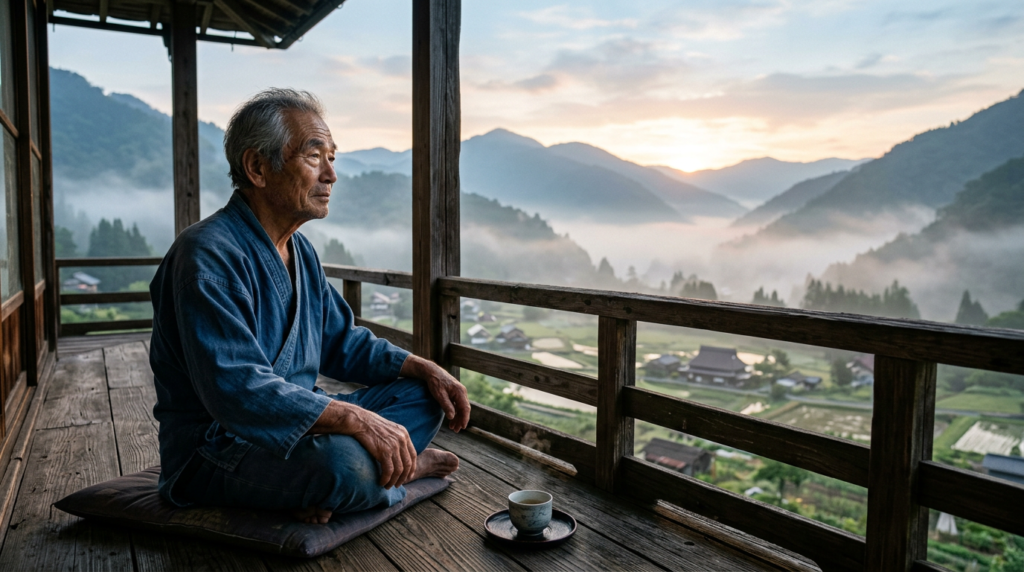
Sometimes the emotional weight of losing mobility arrives long before people talk about it.
Mobility isn’t only about fitness.
And that realization can feel surprisingly emotional.
One section I read about Japanese longevity culture mentioned something called Ikigai — often described as a reason to wake up each morning.
For many older adults in these communities, daily movement remains connected to purpose. Gardening, visiting neighbors, walking to the market, and participating in community routines all keep their bodies involved in life itself.
And maybe that’s part of what modern culture quietly loses.
Many people today don’t stop moving because they want to. They stop moving because life slowly becomes designed around convenience, screens, sitting, and exhaustion.
Then one day they realize they no longer feel fully comfortable doing things that once felt effortless.
That emotional shift matters.
Because mobility isn’t only about fitness. It’s about participation, freedom, confidence, and independence.
The ability to keep saying “yes” to ordinary moments.
Freedom often begins with being able to move comfortably through ordinary life.
Why Daily Movement May Matter More Than Intense Exercise
One interesting pattern repeatedly observed in longevity-focused communities around the world is surprisingly simple:
People keep moving consistently — not intensely, but consistently.
That’s a very important difference.
Modern wellness culture often swings between extremes — strict programs, punishing workouts, and “all or nothing” routines.
But many healthy aging cultures seem built more around gentle consistency than intensity.
Walking daily. Squatting naturally. Standing often. Stretching through ordinary life. Gardening. Carrying things manually.
Using the body regularly instead of remaining still for most of the day.
And perhaps the body responds differently when movement stays integrated into life itself.
One thing that especially stood out to me was how many traditional Japanese homes still involve floor sitting. That means older adults repeatedly practice mobility every single day without calling it “mobility training.”
Simply getting up and down from the floor requires balance, flexibility, coordination, and lower body strength.
In modern life, many people rarely move through those ranges anymore. Not intentionally. Just gradually.
Food, Movement, and the Body’s Natural Rhythm
Another area researchers continue exploring is the relationship between inflammation, nutrition, and mobility.
Of course, no single food magically solves discomfort. But long-term lifestyle patterns do appear to influence how the body feels over time.
Traditional Japanese diets often emphasize vegetables, fish, fermented foods, green tea, smaller portions, and less ultra-processed food.
Combined with regular movement and slower daily rhythms, these habits may create a very different internal environment than the one many modern adults experience.
Today, many people live under constant stress while consuming heavily processed foods and moving very little throughout the day. Over time, some experts believe these patterns may contribute to increased inflammation and reduced physical comfort.
At the same time, the body contains natural cushioning and support systems that help movement feel smoother and more stable.
Hydration, movement, recovery, nutrition, and flexibility may all play important roles in supporting mobility as we age.
And perhaps that’s one reason so many adults today are becoming increasingly interested in wellness approaches focused on movement support rather than simply “anti-aging.”
While researching mobility and healthy aging, I also came across a wellness resource discussing joint comfort and flexibility support in more detail.
You can explore it here if you’re curious.
Because most people aren’t trying to become twenty again.
They simply want to feel comfortable enough to fully participate in life.
The Quiet Withdrawal Most People Don’t Notice
One section of my research stayed with me more than anything else.
A writer described what they called “quiet withdrawal” — that slow process where people begin removing themselves from activities they once enjoyed, not dramatically but gradually.
Skipping walks. Avoiding hikes. Standing less. Sitting more. Turning down invitations.
Telling themselves:
“My body just doesn’t handle that anymore.”
The problem is that this creates a difficult cycle.
Movement decreases. Stiffness increases. Confidence decreases. Movement decreases even more.
That cycle can feel frustrating, especially when you still want to stay active and independent.
Eventually, people begin expecting discomfort instead of questioning whether their lifestyle might be contributing to it.
Sometimes the body slowly disconnects us from the life we still want to live.
That’s why these Japanese village stories felt so powerful to me.
Not because they promised perfection. Not because nobody there experiences aging.
But because they offered a completely different image of what aging can look like when movement remains part of everyday life.
A Different Perspective on Aging
What I appreciate most about these communities is that they don’t seem obsessed with “fighting age.”
That mindset alone feels refreshing.
Instead, the focus appears to be staying engaged, staying useful, staying connected, and continuing daily life for as long as possible.
There’s something deeply calming about that perspective.
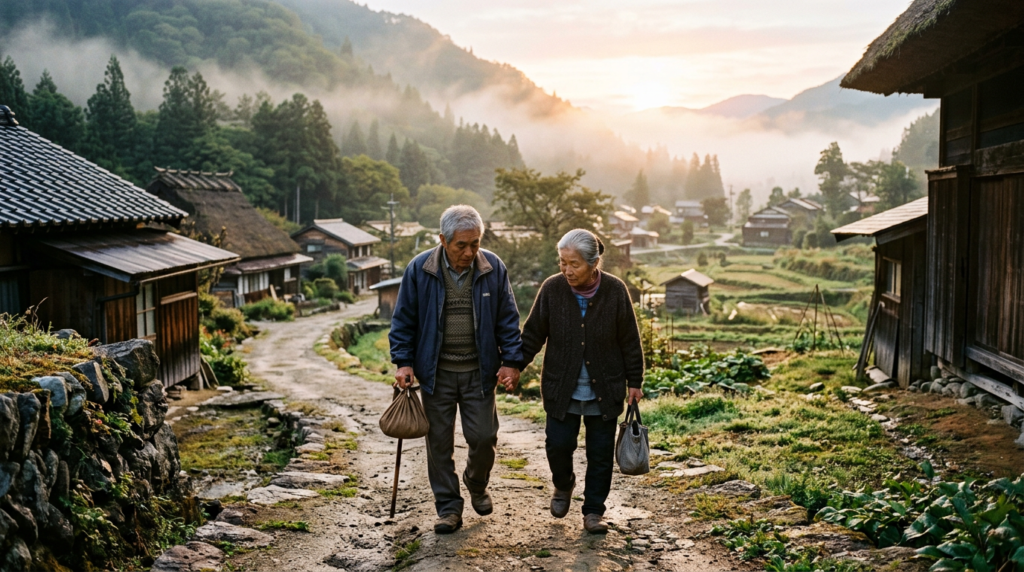
Healthy aging may be less about resisting time and more about continuing to participate in daily life.
Modern culture often treats aging like a battle.
But maybe healthy aging is less about resisting time and more about supporting the body gently enough that movement continues feeling possible.
Not perfect. Not pain-free forever.
Just supported. Capable. Connected.
Small Shifts That Can Make a Difference
Reading about these lifestyles also reminded me that wellness often comes from small repeated habits rather than dramatic transformation.
Walking more frequently. Sitting on the floor occasionally. Stretching naturally. Spending more time outdoors. Eating less processed food. Standing more often during the day.
Taking slower walks instead of chasing extreme workouts.
None of these sound revolutionary. But together, they create a very different relationship with the body over time.
And maybe that’s the real lesson hidden inside those quiet mountain villages.
Not a miracle. Not a “secret cure.”
Just a reminder that the body responds to the life we repeatedly give it.
Exploring Modern Wellness Support
While researching mobility, healthy aging, and longevity-focused lifestyles, I also became curious about the growing number of people exploring nutritional wellness approaches designed to support joint comfort and flexibility as they age.
Of course, no supplement replaces healthy habits, movement, or proper medical care.
But many adults today are becoming more intentional about supporting their bodies through nutrition, recovery, hydration, movement, and wellness-focused support.
I recently came across a wellness resource discussing these topics further, especially around joint comfort and healthy mobility support.
For anyone curious to explore it further, I’ll leave the resource here:
Learn more about the wellness resource here.
Final Thoughts
Maybe the most powerful lesson from those misty Japanese hills isn’t really about longevity at all.
Maybe it’s about relationship.
A relationship with movement. With rhythm. With the body. With daily life itself.
The older adults walking those mountain roads each morning probably aren’t thinking about wellness trends or anti-aging strategies.
They’re simply continuing to participate in life.
And perhaps that’s what many of us are truly searching for too.
The goal isn’t endless youth. It’s continuing to participate in life.
Not perfection. Not endless youth.
Just the ability to keep moving comfortably enough to remain connected to the moments that make life feel meaningful.