
A simple guide to mushroom-based heart wellness, daily vitality, healthy aging, and Japanese-inspired habits after 40.

Mushroom-based heart wellness after 40 is getting attention because many adults are looking for simple, food-inspired ways to support daily vitality and healthy aging.
After 40, many people begin thinking about wellness differently.
It is no longer only about looking fit, losing a few pounds, or following the latest diet trend. Suddenly, things like energy, long-term vitality, heart wellness, family moments, better daily habits, and healthy aging start to feel more personal. Why you may feel tired after waking up?
You may still feel young in your mind, but your body may begin asking for more consistent support.
That is why simple, food-inspired wellness routines are becoming so popular among adults over 40. People want something practical. Something they can actually follow. Something that does not require extreme dieting, expensive meal plans, or a completely new lifestyle.
One idea that has been getting more attention recently is mushroom-based heart wellness — especially when connected with Japanese and Okinawan-inspired daily habits.
This does not mean mushrooms are a magic solution. And it does not mean one habit replaces medical advice, exercise, sleep, or a balanced diet. :
But it does open an interesting conversation:
Could simple food-inspired habits, including certain mushrooms and mushroom-based routines, be a helpful part of daily wellness after 40?
Let’s look at why this idea is gaining attention.
Why Heart Wellness Feels More Important After 40
For many people, the 40s and 50s bring a quiet shift.
You may start noticing that your energy is not always the same. You may think more seriously about what you eat. You may become more aware of stress, sleep, weight changes, family history, or how your body responds to everyday routines.
This is usually the stage where health stops feeling like something “for later.”
It becomes part of daily life.
Heart wellness after 40 is not only about numbers on a report. It is also about the small choices you repeat every day — what you eat, how much you move, how you manage stress, how well you sleep, and whether your routine supports the life you still want to enjoy.
For some people, that means walking more.
For others, it means eating lighter dinners, drinking more water, cutting back on processed foods, or choosing more fiber-rich meals.
And for many adults, it means looking for simple daily support that feels natural and easy to stay consistent with.
That is where mushroom-based wellness has started to create curiosity.
If you often wake up feeling low on energy, this guide on why you may still feel tired after waking up may also help.
The Problem With Complicated Health Advice
The wellness world can feel overwhelming.
One person says to avoid carbs completely. Another says to count every calorie. Someone else says you need intense workouts, expensive supplements, or a strict meal plan.
For a busy adult over 40, this can feel exhausting.
Most people do not fail because they do not care about their health. They fail because the plan feels too complicated to follow for more than a few days.
That is why simple routines often work better.
A short walk after meals.
More vegetables during the day.
Better sleep habits.
Less late-night snacking.
More fiber-rich foods.
A calmer morning routine.
A daily wellness habit that feels easy enough to repeat.
The goal is not to become perfect overnight.
The goal is to build a lifestyle that supports your body without making your life feel smaller.
What Makes Japanese and Okinawan Wellness Habits So Interesting?
Japanese and Okinawan wellness habits have become popular in health conversations because they often focus on simplicity, routine, and balance.
Many traditional Japanese-style meals include vegetables, mushrooms, soups, fermented foods, green tea, seafood, plant foods, and smaller portions. Okinawan-inspired eating patterns are also often discussed because of their connection with healthy aging and long-term vitality. Japanese healthy aging habits
Of course, no culture has a perfect lifestyle, and it would be wrong to say one habit explains everything.
But there is something useful we can learn from these traditions:
Wellness does not always have to look extreme.
It can be simple.
It can be food-inspired.
It can be part of your normal day.
It can be built around small habits that add up over time.
This is one reason mushrooms have become such an interesting part of the conversation.
They are not new. They have been used in food traditions for a long time. But now, more adults over 40 are starting to look at mushrooms through the lens of daily wellness, healthy aging, energy, focus, and heart-support routines.
Why Mushrooms Are Getting Attention in Wellness
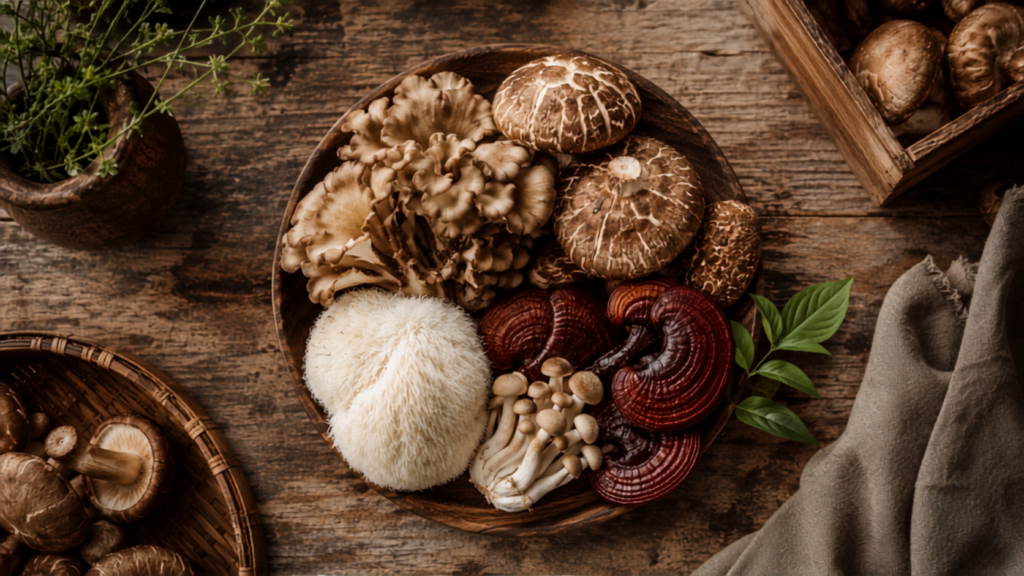
Mushrooms are unique because they sit somewhere between food tradition and modern wellness interest.
They are commonly used in everyday meals, but certain varieties are also discussed in wellness circles because of their natural compounds, fibers, and traditional use.
Some of the most talked-about mushrooms include:
Reishi — often associated with calm, balance, and general wellness support.
Shiitake — widely used in Asian cooking and valued as a nutrient-rich mushroom.
Maitake — often discussed in food-based wellness routines.
Lion’s mane — commonly connected with focus, clarity, and brain wellness conversations.
Cordyceps — often associated with energy and vitality support.
This does not mean these mushrooms should be treated like medicine.
But it does explain why many people are becoming interested in mushroom-based daily routines after 40. They feel food-inspired, natural, and easier to understand than complicated health trends.
This is why mushroom-based heart wellness after 40 has become an interesting topic for people who want simple daily support.
For adults who want to support heart wellness, healthy aging, daily energy, and long-term vitality, mushrooms offer an interesting place to start.
The “White Carb” Mushroom Story That Sparked Curiosity
One of the more unusual ideas getting attention is sometimes described as a Japanese-inspired “white carb” mushroom story.
At first, that phrase sounds confusing.
Most people hear “carb” and think of bread, rice, pasta, or sugar. But in some wellness presentations, the phrase is used to describe a mushroom-based idea connected to certain fibers and natural compounds found in mushrooms.
This is where curiosity begins.
Instead of focusing only on restriction — removing foods, fearing meals, or following strict rules — the mushroom wellness angle focuses on daily support.
It asks a different question:
What if heart wellness after 40 could also include adding the right supportive habits, not just removing everything you enjoy?
That idea is one reason mushroom-based heart wellness has started to get attention.
Again, this should not be seen as a cure, treatment, or replacement for medical advice. Anyone dealing with a health condition or taking medication should always speak with a qualified healthcare professional.
But as a food-inspired wellness concept, the Japanese mushroom story is interesting because it feels simple, natural, and routine-friendly.
And for many adults over 40, that matters.
Curious about the Japanese mushroom story?
There’s a short presentation explaining why this mushroom-based “white carb” idea is getting attention after 40.
Heart Wellness After 40 Is About Daily Support, Not Fear
A lot of people only start thinking about heart wellness when something scares them.
But fear is not always the best motivator.
In fact, fear can make people feel stuck, confused, or overwhelmed.
A better approach is to think about heart wellness as daily support.
Support for your energy.
Support for your future.
Support for family moments.
Support for staying active.
Support for feeling more confident in your routine.
Support for the life you still want to enjoy.
After 40, wellness becomes less about chasing perfection and more about protecting your quality of life.
You want to keep going for walks.
You want to enjoy family meals.
You want to travel without feeling drained.
You want to stay present for your children or grandchildren.
You want to wake up feeling like you are doing something good for your body.
That is why small, repeatable habits can be so powerful.
They do not need to be dramatic to matter.
A Simple Daily Heart Wellness Routine After 40
If you are interested in supporting heart wellness naturally after 40, you do not need to change everything at once.
Start with simple habits you can actually repeat.
1. Begin the day with water
Before tea, coffee, or breakfast, drink a glass of water.
Hydration supports normal daily function and can help you start the day with a better rhythm.
2. Add light movement
You do not need an intense workout every morning.
Even a 10-minute walk, gentle stretching, or light house movement can help you feel more active and connected to your body.
3. Choose more fiber-rich foods
Fiber-rich foods are an important part of a balanced wellness routine.
Vegetables, fruits, beans, lentils, oats, seeds, and mushrooms can all help make meals feel more complete and satisfying.
4. Include mushrooms more often
Mushrooms can be added to soups, stir-fries, rice dishes, salads, vegetable bowls, and light dinners.
Shiitake, maitake, button mushrooms, oyster mushrooms, and other varieties can make meals more flavorful while supporting a food-based wellness lifestyle.
5. Take a short walk after meals
A gentle walk after lunch or dinner can be a simple way to support digestion, movement, and daily activity.
It also helps break the habit of sitting for long periods.
6. Create a calmer evening routine
Stress and poor sleep can affect how you feel the next day.
Try reducing screen time before bed, keeping dinner lighter, and creating a peaceful routine your body can recognize.
7. Stay consistent instead of being extreme
The best wellness habit is the one you can actually keep doing.
A simple daily routine repeated for months is often more useful than a strict plan followed for only three days.
Want to see the mushroom-based routine people are talking about?
Watch the short Japanese-inspired wellness presentation here.
Why “Small Daily Support” Often Works Better Than Big Lifestyle Pressure
Many adults over 40 already have enough pressure.
Family responsibilities.
Work stress.
Money worries.
Sleep issues.
Health concerns.
Busy schedules.
The last thing most people need is another complicated routine that makes them feel like they are failing.
This is why small daily support matters.
A better breakfast.
A short walk.
A lighter dinner.
More mushrooms and vegetables.
A few quiet minutes in the morning.
A simple heart wellness routine.
A daily reminder that your body deserves care.
These habits may look small from the outside, but they can change how you feel about your health.
They give you a sense of control.
And after 40, that feeling is valuable.
Who May Find Mushroom-Based Heart Wellness Interesting?
Mushroom-based heart wellness may be interesting for adults who:
- Are over 40 and thinking more seriously about daily wellness
- Want a simple food-inspired routine
- Feel overwhelmed by complicated health advice
- Are interested in Japanese or Okinawan wellness habits
- Want to support healthy aging and daily vitality
- Prefer small steps instead of extreme lifestyle changes
- Want to feel more consistent with their wellness routine
It may also interest people who are already trying to eat better, walk more, reduce stress, and build a more supportive lifestyle.
However, it is important to be clear:
Mushroom-based wellness is not meant to diagnose, treat, cure, or prevent any medical condition. If you have a medical condition, take prescription medication, or have specific health concerns, speak with a qualified healthcare professional before making changes to your routine.
What to Look for in a Mushroom-Based Wellness Routine
If you are exploring mushroom-based wellness after 40, look for a routine that feels simple, realistic, and supportive.
A good wellness routine should not make you feel afraid of food.
It should not promise overnight results.
It should not make dramatic claims.
It should not replace medical advice.
It should not pressure you into extreme changes.
Instead, it should help you think more clearly about your daily habits.
The best approach is usually balanced:
Eat more whole foods.
Move your body regularly.
Sleep better when possible.
Manage stress gently.
Stay hydrated.
Support your body with consistent routines.
Be patient with yourself.
Heart wellness after 40 is not about doing one perfect thing.
It is about doing several simple things more often.
Final Thoughts: Heart Wellness After 40 Can Start With Simple Habits
Mushroom-based heart wellness is getting attention because it fits what many adults over 40 are looking for:
Something simple.
Something food-inspired.
Something connected to healthy aging.
Something that feels easier than extreme dieting.
Something that supports a daily routine.
Japanese and Okinawan-inspired habits remind us that wellness does not always need to be complicated. Sometimes, the most powerful changes are the ones that feel small enough to repeat.
More movement.
Better meals.
More fiber.
More mushrooms and plant foods.
Better sleep.
Less stress.
More consistency.
After 40, your body does not need punishment.
It needs support.
And if a simple mushroom-based daily habit helps you become more mindful about heart wellness, healthy aging, and long-term vitality, it may be worth learning more.

Curious About the Japanese Mushroom Wellness Story?
Some adults over 40 are now watching a short presentation about a Japanese-inspired mushroom wellness idea sometimes called the “white carb” mushroom story.
It explains why mushroom-based daily support is getting attention among people interested in heart wellness, healthy aging, daily vitality, and simple food-inspired routines.
This presentation is for informational purposes only and is not a replacement for medical advice. Always speak with a qualified healthcare professional about personal health concerns, especially if you take medication or have an existing condition.